
What is Inflation?
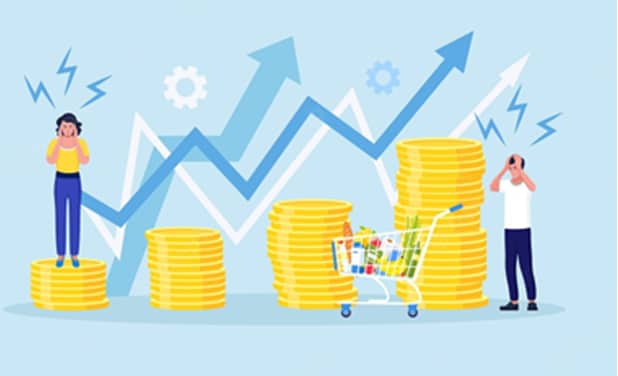
When I was a child, I used to buy 5 kinder joys for just ₹100. But now, I can hardly buy 2 kinder joys for my nephews for the same ₹100 and I also observed they are small in size. Other experiences like, I still remember enjoying a big parle-G pack just for ₹5, and I always help my mom by getting tomatoes from the market just for ₹20 per kg in 2020. I wonder why all these scenarios changed in just 5 years.
I know these are thoughts that run through everyone’s mind, right?
As I grew older and became aware, I realized that all these changes are due to something called ” Inflation “. Probably you have read or heard this term too. Most of us have heard the term Inflation in our lives but we are not sure about, what is it and its effect on us in our daily life. so let us know about Inflation in detail and understand what is its impact on us and how to secure ourselves from inflation
What is Inflation – Inflation is the rate at which the prices of goods and services increase over time, reducing the purchasing power of money. The definition looks simple, but its impact is long-lasting and effective. Inflation decreases purchasing power.
Example:
- The price of 1 kg tomatoes in 2020 is around average – ₹20 per kg.
- The price of 1 kg tomatoes in 2025 is around average – ₹40 per Kg
* Value of money Decreased, for the same ₹20 now we are getting half kg. Here the ₹20 is the same but its Value ( worth ) is decreased right, so inflation decreases the value of money.
History of Inflation
The History of inflation exists from back kings ruling but the major effect started or seen by the world in the year 1920’s. where the world witnessed.
- During Germany’s hyperinflation in the 1920s, the price of bread increased dramatically due to excessive money printing after World War I.
- 1970s US Oil Crisis.
- 1960s Food Shortage in India.
- 1991 economic reforms in India.
- 2008 – 2009 global recession.
- 2020 – 2022 covid pandemic.
These are the remarkable inflation crises that must be addressed, here if you try to connect a point you can find a common point that inflation raises in uncertain situations: wars, diseases, shortages etc. we dive deep into the reasons in future.
How Inflation is Calculated?
Before we dive into what inflation actually means, let’s first learn how to calculate inflation in simple terms. In India there are 2 types of inflation indexes.
- CPI – consumer price index
- WPI – Wholesale Price Index
CPI – consumer price index : very important this is the major one.
These measures the daily fluctuations of the daily need items like food, fuel, clothing, rent etc. This is tracked daily and updated. This CPI represents urban and rural consumers data consumer spending and released the CPI data monthly by ” MOSPI Ministry of statistics. “
WPI – Wholesale Price Index : Bulk prices
This tracks the prices of goods at wholesale level, not at retail level. which includes raw materials , fuels , industrial items. Formula; Inflation Rate = [(Current CPI – Last Year CPI) / Last Year CPI] × 100
- > Example: CPI (2024) = 180, CPI (2023) = 170
- → Inflation = (180 – 170)/170 × 100 = 5.88%
Why Inflation Reduces Value of Money?
Inflation reduces the value of money because it reduces the purchasing power. ok, I understand that it is a little messy. I too feel that lets simplify the concepts.
The same example I shared previously which in 2020 I used to buy 5 kinder joys with ₹100, now I can buy only 2 kinder joys with the same amount ₹100 here – ₹100 is not changed but here the value of ₹100 changes from 4 quantities to 2 quantities.
“Inflation reduces the value of money “ – here ₹100 value in 2020 is 4 quantities but in 2025 the value of the same ₹100 is 2 quantities. The purchasing power of what quantities or value we are getting from our spending is reduced!
Causes of Inflation
More money printed
Inflation increases, why because imagine a country printed more money irrespective of their production and output the money in the market will increase but the products or items same
Example: There are 100 apples in the market and the total money = ₹1000 which 1 apple costs ₹10, later money = ₹2000 the government prints more money but still only 100 apples. Now buyers have more money so everyone wants to buy apples at that time the seller increases the price of 1 apple to ₹20. So, when money is printed more , the value of money decreases and price increases.
* Still tricky in the above example please read this example, The value of 1 apple is ₹10 but due to more availability of money prices increased to ₹20 then the value of ₹10 is decreased. If someone has ₹10 he is able to buy the apple, but he doesn’t have ₹10, so he can’t buy. same ₹10 but that value of ₹10 is decreased due to more availability of cash in the market.
Demand > Supply
It is reciprocal to the above scenario if there is a huge demand for a product but the supply is limited then the seller will increase the price, inflation increases.
Petrol, diesel increases → Transport cost increases → Everything price increases
If the prices of petrol or diesel increases then the transport cost is increased here the fuel or diesel is used to transport every product vegetable , grains, clothes etc. So the final or end product prices also increase if there is an increase in Petrol, diesel increases.
External factors (wars, pandemics)
Simple reason is supply chain broke and items availability drops – reduces production , prices increases. Yes, up to now we have a good overview of what inflation is and why it is important to consider. Now let’s dive deep to know some other important concepts related to inflation..
Types of Inflation with Examples
1. Demand-Pull Inflation.
This scenario arises when there is a mismatch between the demand and the supply, simply demand increases and supply is less. Let’s understand with an example.
Example: In the festival season most of us buy gold, but the gold resource and supply is limited, so gold prices will increase in festival times and decrease after everyone stops instant buy and situations go back to normal. Gold prices start falling. So, here when there is demand the price will increase and vice versa.
2. Cost-Push Inflation.
This scenario is raised when the cost of the production increases and then companies will increase the cost of the end products.
Example: The increase in petrol price, the transportation charges will also increase. Then the dealer who sells will automatically increase the cost of the end product – vegetables, grains, and many others.
3. Built-in Inflation.
This is a loop type inflation. Why I am saying loop type inflation: In a company if an employee asks for higher salaries, then companies will increase the prices of their products to cover salary expenses. Again salaries increase, then again price increases – this goes in a loop but the end result is inflation.
4. Hyperinflation.
Extreme inflation – the prices increase rapidly daily/hourly etc.
Example: In Germany 1920, hyperinflation due to World War – the cost of 1 bread is nearly 10,000
Who gets affected by inflation.
1. Salaried and Fixed Income people.
The first affecting person is Salaried and Fixed Income people. There are no big calculations needed to say this – salaried and fixed income people will get affected first because the pay structure of both salaried and fixed income people remains the same for a year and they will receive the same income at the end of the month. But the inflation, on the other hand, will increase yearly and in some cases monthly also, which becomes:
**Monthly income is the same, but prices rise every month – then struggle increases.**
2. Daily Wage Worker.
Income is low but daily expenses are high, where more pain is experienced. Similarly, for Retired people it is even tough for them to survive with respect to inflation. No income, but daily expenses.
3. People who keep money in savings accounts.
For this category let’s see an example and I will share a live example which I saw…
My uncle, who is a retired Military person, got his entire retirement amount. Some good amount he just kept in a savings account where he may be awarded with 2–3% annual returns. I said multiple times that: “Uncle, you are just parking your sum amount in a savings account – you are decreasing the value of the amount by your hands only. Please at least keep some amount in FD.”**
Uncle used to say:
**”Us samay kya hoga, main nahi keh sakta beta.”** (Means: We can’t predict the time and when money will be needed, child.)
Yes I agree with him, but FDs are also breakable, right? Ok it’s up to him. Let’s see what happened:
After 4 years, his sons got marriage but my uncle faced money problem because whatever the money he parked in savings account – is the same amount that may have cost for his sons’ marriage at the time he calculated** (way back 4 years).
Then after 4 years, the **same amount** he withdrew from the bank **was not sufficient** for the marriage. Why?
Where did the mistake happen? 4 years ago, my uncle started research and safely saved the amount which is needed for the marriage very early, right? But why was money not sufficient after 4 years?
Simple answer: Prices of goods changed over time.
At the time of planning: * The cost of convention hall = ₹20,000 but, Later = ₹50,000
Overall expenses he wrote = ₹20 Lakhs, now = ₹30 Lakhs
How to Beat Inflation for Individuals?
If I say, to control or beat inflation we just need to invest – then you may think: *”Is there no other way other than investing?”*
Yes, there are other ways also to beat or control inflation. But the best and easy way is ” investment ” – for individuals.
How investments can beat inflation?
In general, some investments historically generated high or low returns, depending on the type of asset you are investing in – whether it’s gold, mutual funds, stocks, real estate. Inflation per year is around 6–7%, may increase or decrease subject to current situations.
Ok, I know you’re eagerly waiting to know other possible ways to beat inflation. They are:
1. Increasing interest rates
Yes, inflation can be controlled by increasing the interest rates, which is done by **RBI**. RBI is the main body which controls inflation. Whenever the RBI points out a rise in inflation, they increase the Repo Rate.
**Repo Rate = Interest rate at which RBI lends money to banks.**
How does this help?
→ Increase in repo rate results in loan interest rates increasing then people take fewer loans. So, spending reduces then demand for goods drops also ” prices drop ” → ** inflation gets controlled. **
Example: In the year 2022, inflation was at its peak. RBI increased repo rate from 4.5% to 6.50%. Then new loan accounts reduced and inflation got controlled.
2. Decreasing Money Printing.
Whenever the government prints more money, indirectly inflation increases — because availability of cash in the market increases then demand increases then prices increase.
3. Building Supply Chain
When there is a shortage of goods, prices automatically increase. So the government needs to arrange proper transport, storage, production plan etc. If they maintain the standards, they can control price hikes.
Example: Vegetables – Cold storage, Grains – Warehousing and Direct farmer to consumer – Supply chains
4. Maintaining Import/Export Policy.
When there is a shortage, the government needs to act fast and import the required goods to stabilize prices. If excess goods are there, export and maintain balance.
5. Subsidies & Price Control.
The government sometimes gives subsidies (discounts) on essential items like gas, food grains, fertilizers. This makes them affordable to the public and controls the inflation impact.
Final Words: As you see, the above ways to control inflation are not in our hands. And even if they are in our hands, they are not always helpful or profitable for us. So, for individuals, investing is one of the commonly used methods to try and stay ahead of inflation. The choice of method depends on personal financial goals and risk tolerance.
As I already mentioned – historically some asset class may generate possible higher or lower returns(with respect to fluctuations). So, if you invest money for the long run, it may generate returns and help to beat inflation.
Historically, different asset classes have performed differently based on economic cycles, demand, government policies, and market conditions. However, past performance does not guarantee future results. Investors should evaluate risks carefully and seek professional guidance when needed.
Conclusion:
Inflation decreases the value of money and purchasing power for anyone who doesn’t consider it. So, investing wisely and early is one way to beat inflation.
YOU CAN ALSO READ What is Investment.


1 thought on “What is Inflation? Meaning, Causes, Effects, and How to Beat Inflation”